
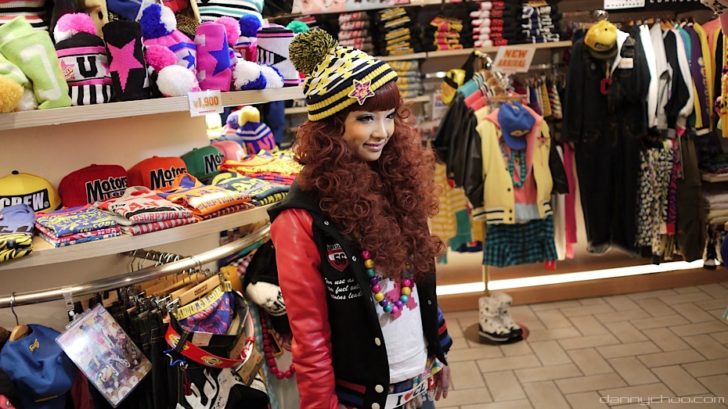
Fashion in Tokyo, Japan has long been a point of inspiration for young adults all around the world. Each decade has something new and unique to offer. However, the most relevant and influential years began in the 1990s.
Similar to the rest of the world, the ’90s served as a cultural reset for Japan. Fashion became more eclectic, self-expressive and less focused on luxury brands. Today, the street style in Japan still has a distinct feel that mixes American pop culture influence with the effortless Japanese swag we have seen for years. The evolution of fashion from the ’90s to now is fascinating to delve into because of the vast differences in the way we shop and find style inspiration. With the introduction of fast fashion and increased reliance on online commerce, barely anything about the Tokyo fashion scene is the same.
1990s | A New Wave of Fashion Emerges
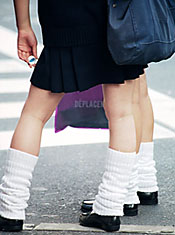
Kogal-“Loose Socks” by Mike Chachich is licensed under a CC by-SA 3.0
Historical events tend to influence fashion and pop culture despite not being directly related. The ’90s were a difficult time for Japan. The economy was in peril with a stock market crash and a mass increase in national debt. As seen throughout history, dark times usually give way to fresh, bright ideas from the people of the distressed nation. With the creation of ’90’s staples like Hello Kitty, Sailor Moon and Pokémon, it was clear that the youth were heading the culture of this decade. Subcultures like gal fashion emerged out of Shibuya as a rebellion against the established beauty standards of the ’80s. This consisted of platform shoes and miniskirts and was popular among teen girls in the ’90s. The trends that dominated the ’90s were starting to incorporate more eclectic, less polished and more reasonably priced garments as a response to the state of the economy in Japan.
Along with the sudden uprising of affordable fashion that followed the economic crash, there came a demand for DIY styles, as well as an increase in streetwear and punk fashion with crowded silhouettes opposed to the usual, sleek business casual style. Fashion magazines like FRUiTS dominated the stands and served as inspiration hotspots for the streetwear of the time. The creator of FRUiTS, Shoichi Aoki, says of ’90s streetwear in an interview with Tokion magazine, “It changed abruptly around 1996. There were no trends. People mixed brands, reconstructed garments on their own, styled Japanese clothes, and so forth. Each individual had a different style.”
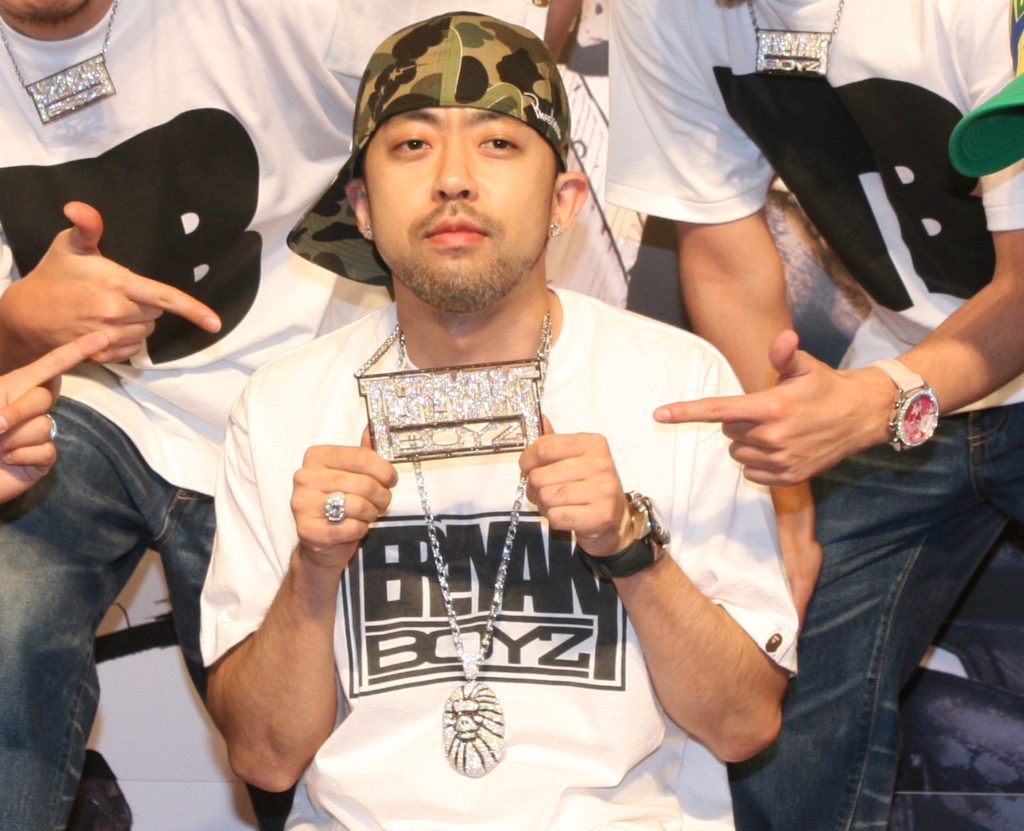
“Nigo”, founder of A Bathing Ape by Sry85 is licensed under a CC-by SA 3.0
Harajuku was the capital of street style in Japan at this time. Aoki would photograph young adults who would gather on the streets of Harajuku simply just to honor their unique style. These street photoshoots would become popular for years to come when surveying the fashion that the youth was wearing every day and mimicked the role that social media plays today. As the ’90s progressed, the baggy silhouette became the latest trend and saturated colors were your outfit’s best friend. This originated from brands like A Bathing Ape and Neighborhood that married skater and hip-hop subcultures to create the new standard for streetwear.
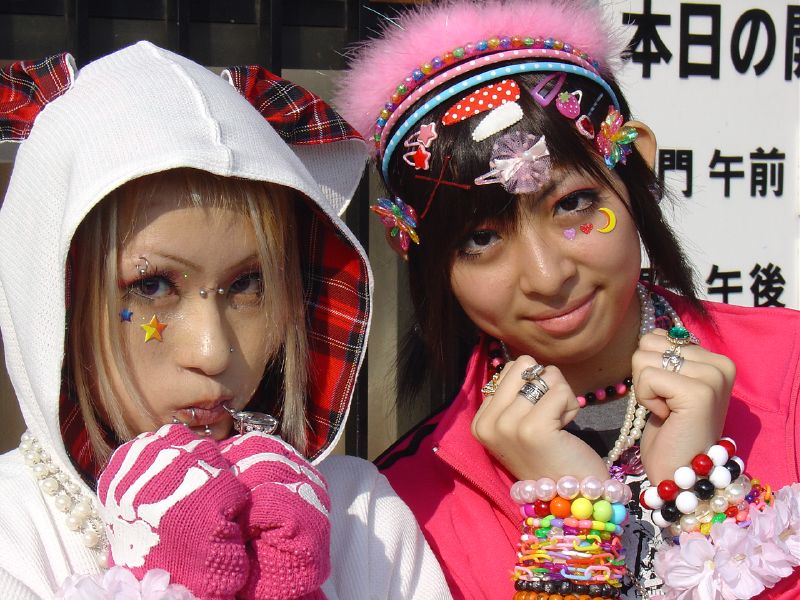
Fashionistas mixed prints, patterns, colors and accessories to assemble an eccentric outfit that turned heads in this decade. A couple of the most notable fashion trends that were established in the ’90s were kogyaru (fashionable school girl outfits with slouchy socks and platform shoes) and decora (vibrant layered prints and accessories) for women and urahara (’90s hip-hop style mixed with punk elements) for men.
2000s | Bling, Bows, Ruffles Oh My!
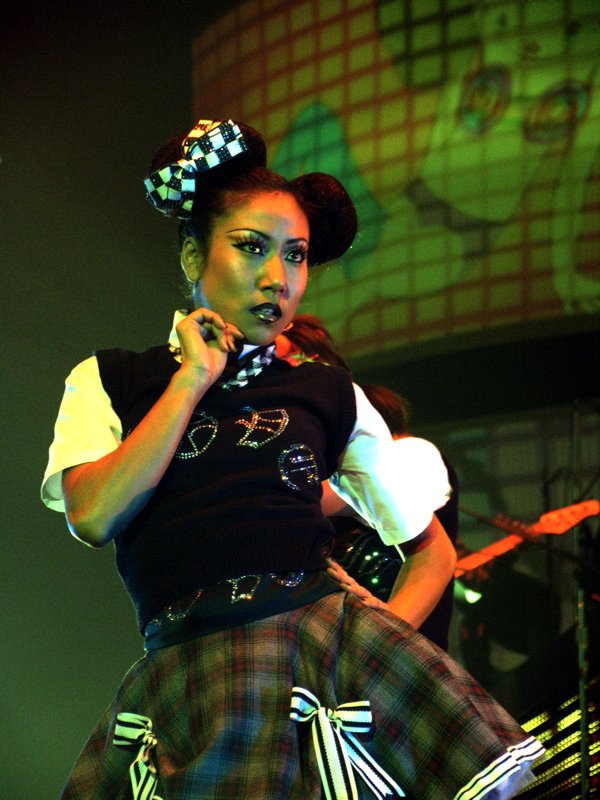
Max “Love” Chino, member of Gwen Stefani’s Harajuku Girls group, 2005
The 2000s is almost certainly the era of fashion in Japan that is the most referred to in global pop culture. In the U.S., you had Gwen Stefani’s “Harajuku Lovers” brand emerging in 2004. This popularized a version of the kawaii Japanese fashion trends even more to the American mainstream media. This became the inspiration for many U.S. pop artists of that time like Nicki Minaj, who coined herself the “Harajuku Barbie.” Harajuku became a global symbol of kawaii fashion. Styles that were popularized in this era were gyaru (tan and frosty makeup, artful hairstyles, blingy accessories and mini shorts) and Lolita (frilly lace dresses, elaborate head pieces and girly platform heels). Many of the trends that became widespread originated in Harajuku and Shibuya, a big district in Tokyo that is still known for its fashion and culture today.
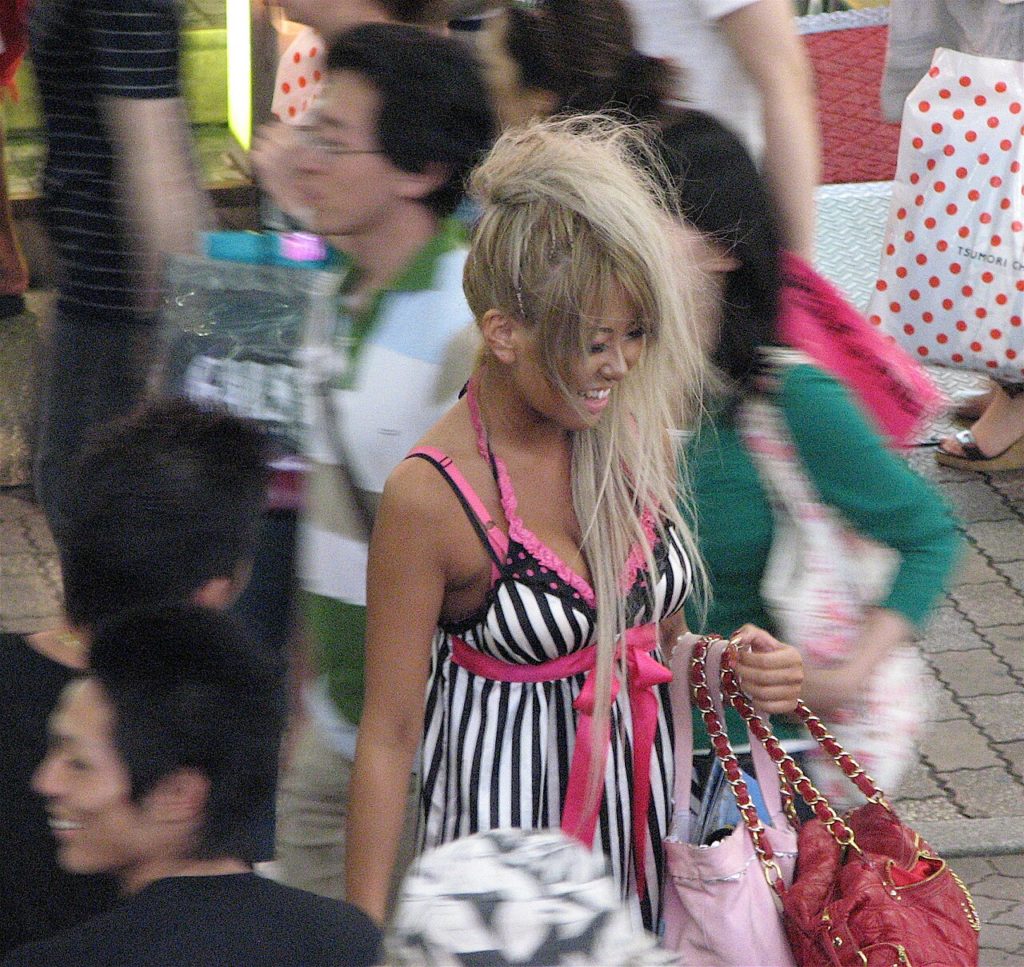
“Gyaru” by ThisParticularGreg is licensed under a CC-by SA 3.0 license
The subcultures that emerged in the 2000s were a more exaggerated version of their ’90s counterparts. Kogyaru became gyaru, a more dramatic version of the primary subculture that consisted of dark, bronzed skin, heavy makeup, big hair, micro shorts and blinged out tops and jewelry. Gyaru is experiencing a resurgence in media recently as of 2024. Tokyo offers services that give you a full gyaru makeover and photoshoot. This service is often sought out by tourists who idolize these popular aesthetics.
The fashion of the 2000s in Japan carried on the rebellion of the ’90s but transformed it into something completely new and fun. Magazines like KiLaLa, Dia Daisy, ViVi and Jelly all show the hyperfeminine, extravagant style that dominated the culture in this decade.
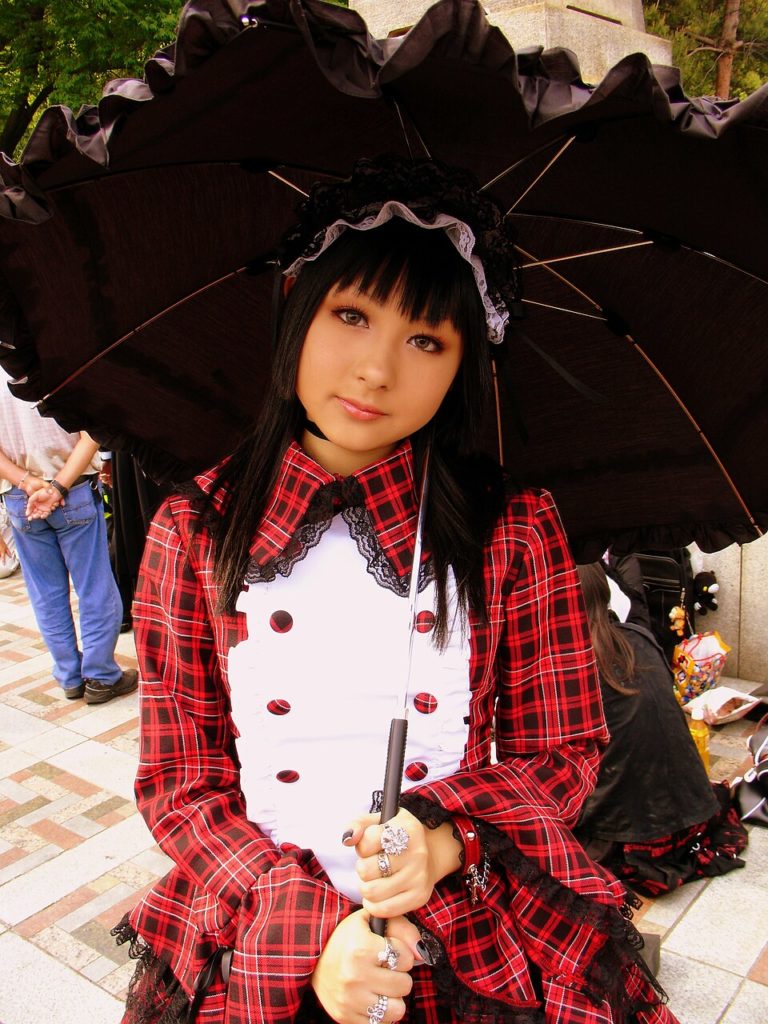
“Lolita” by Matt Watts is licensed under a CC by-S A 3.0 license
On the more mainstream side of fashion in Japan in the 2000s, more muted colors were coming back into style. Monotone colors were becoming popular again in both the clothes and the hair which is a stark contrast from the colorful hairstyles in the ’90s that became a part of the outfit. Mid-length skirts and cardigans were popular for everyday dress among women.
Once the 2000s were coming to a close, a new threat was posed to the fashion industry. This wouldn’t truly overtake the industry until years later but it did have immediate consequences on the mainstream opinion on fashion. Fast fashion was introduced and quickly took hold of the industry with the abolishment of textile quotas in January of 2005. Where there was once a limit on how many textiles could be exported to other countries, there was now an unrestricted market that would put established fashion brands in jeopardy.
2010s | Kawaii Takes Over Harajuku
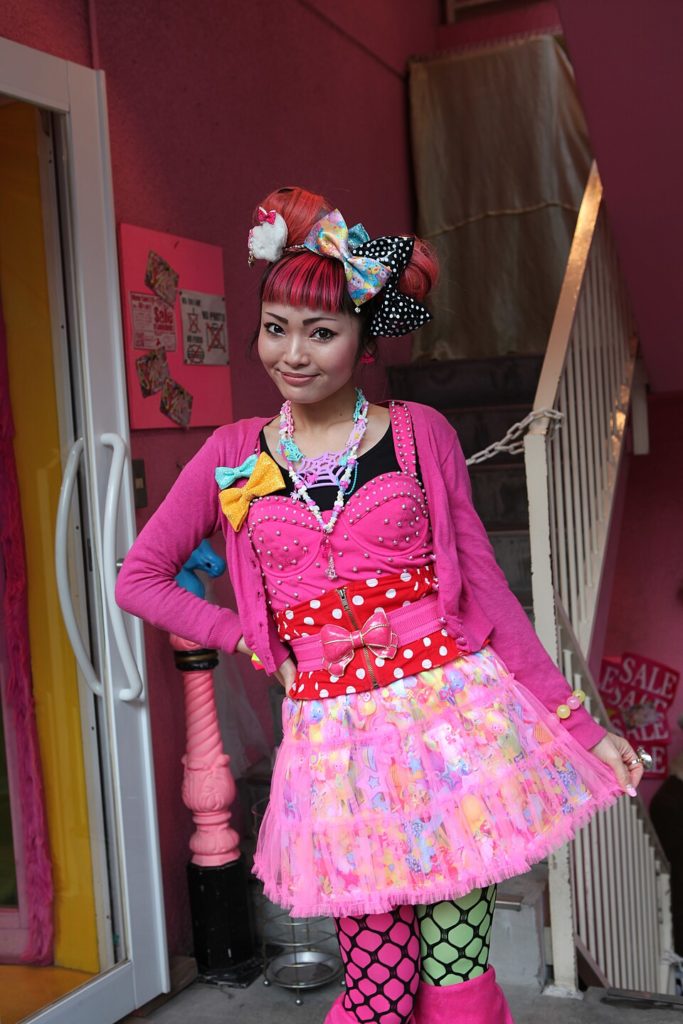
The 2010s marked another pivotal moment in fashion when the digital market really took off. Tumblr, a social media site created in 2007, was all the rage for the youth across the globe. Japanese influence could be seen in every corner of the site whether it be kanji in a text post or the popularization of kawaii elements on people’s pages. Tumblr greatly influenced fashion in Tokyo, making internet trends and cyber and pastel goth aesthetics the new norm. Japanese culture was at the forefront of the internet trends and this translated through many celebrities wanting to visit and shop in Tokyo, more specifically Harajuku.
Celebrities from all over the globe wanted to get a piece of the Tokyo-exclusive brands that set up shop on Takeshita Street off of Harajuku Station. The stores on this street were reminiscent of the current trends and each occupied their own niche within them. Trends like mesh tops, high platform shoes, thigh-high socks, graphic crop tops and pastel garments could all be found in the stores on Takeshita Street. Boutiques and brand flagships were opening up left and right — like Spinns that held many indie brands and the widely known legwear store, AvantGarde Harajuku that sold decorative tights that paired well with any outfit. Sadly, this shop closed for good in 2014.
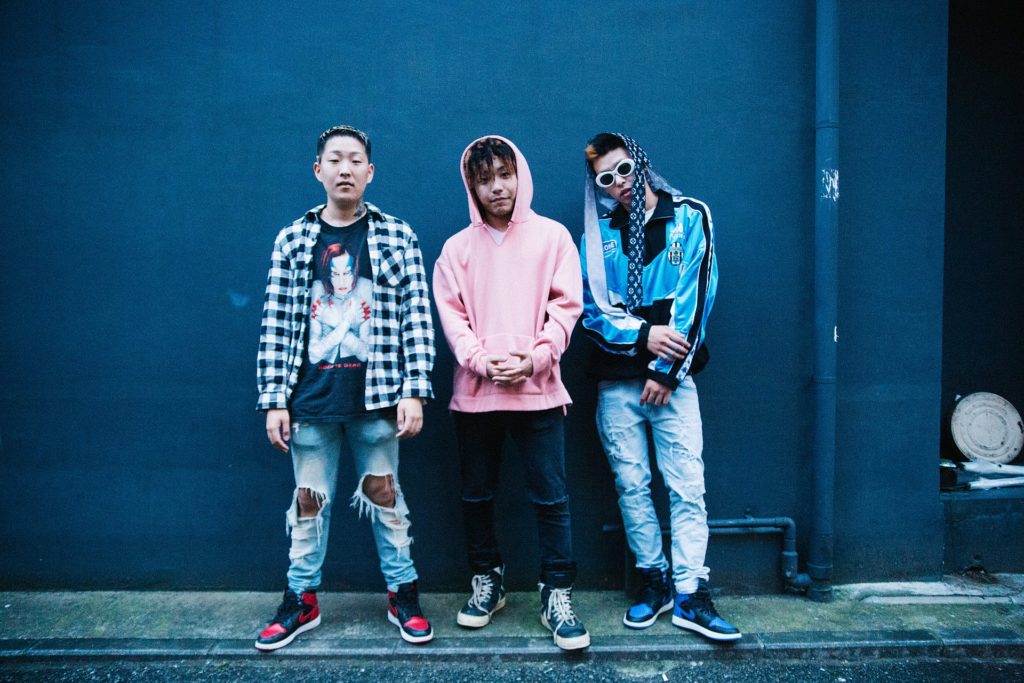
“Harajuku Fashion”, 2017 by Dick Thomas Johnson is licensed under a CC by 2.0 license
Men in this decade wore renditions of streetwear from previous decades only the silhouette was tighter and cleaner. Brands like Galaxxxy, Hyper Core and Moschino held desirable styles for men during this time. The style became a version of streetwear that was more refined, colorful and emo rather than punk and DIY.
Despite its initial positive impact on the youth culture in Tokyo, the rise of social media and internet usage began to force the fashion industry into a downfall. Online shopping was rapidly expanding and reaching new audiences like never before. This resulted in the desire to ramp up production by any means possible. The quality of garments started to decrease and more micro-trends started to emerge.
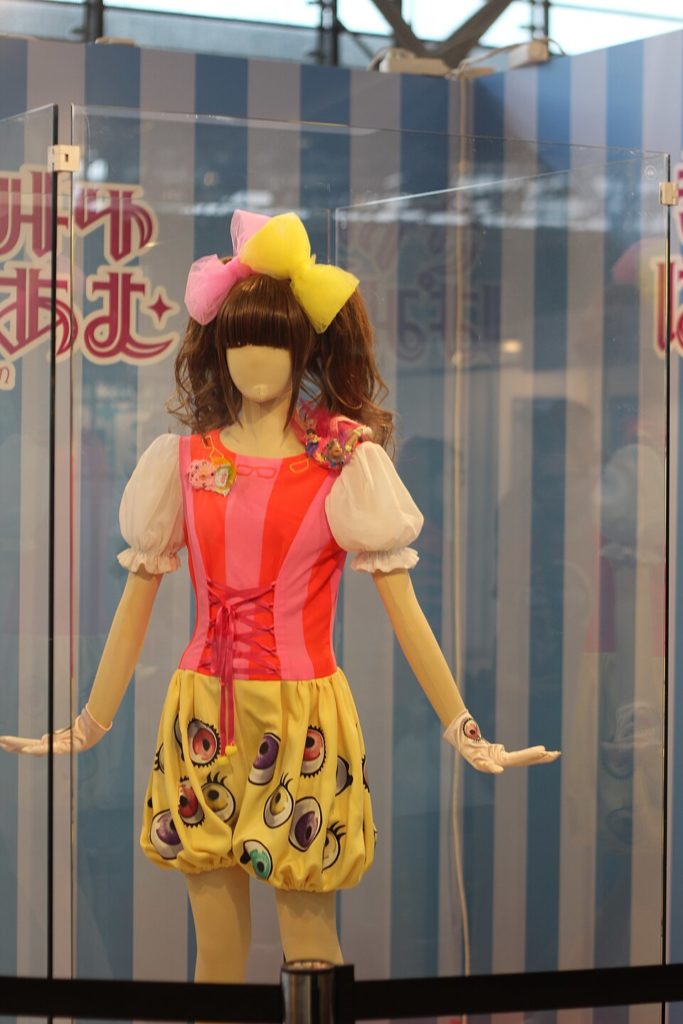
“Kawaii Clothes”, 2014 by ActuaLitte is licensed under a CC by-SA 3.0 license
The brands that once dominated the industry were being pushed out and deemed as over-priced in comparison to their polyester knock-offs from the ultra-fast-fashion sites that were taking charge. Still, shops that had been open since the ’90s and early 2000s still had an audience and did appeal to the young adults in Tokyo. Brands like Nude N’ Rude, Spinns, D.I.A., CoCoLuLu and more all stayed alive until the end of this fateful decade. Styles that have remained popular in the media are now nowhere to be found in the malls or streets of Tokyo because global market competition seemingly took priority over the consumer.
2020 – Present | The End and Beginning of an Era
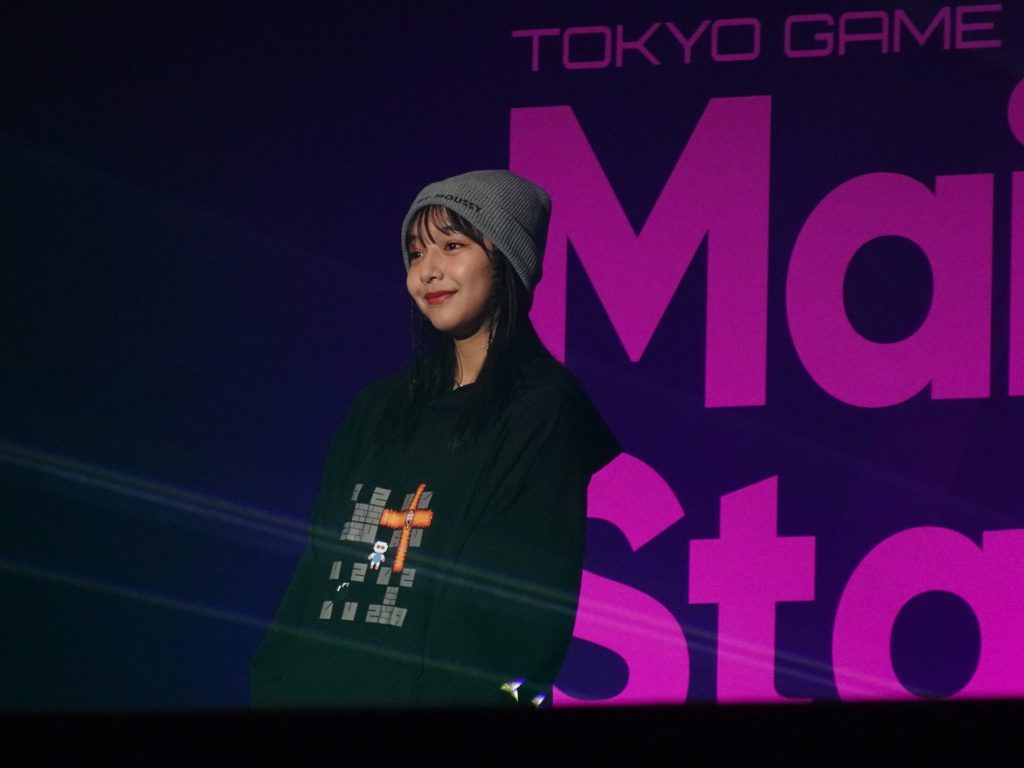
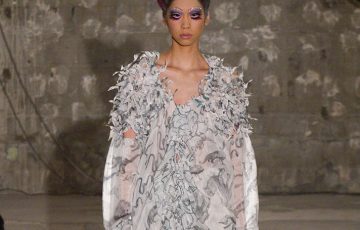
“AZUL by MOUSSY” fashion show 2023 by Yuki Uchida is licensed under a CC by 4.0 license
The style of the 2020s in Tokyo is a culmination of all of the eras that came before. Styles that have been disregarded since the mid-2010’s are making a comeback while leaving room for new trends. When walking the streets of Harajuku, Shinjuku or Shibuya, you see intentional, fashionable outfits everywhere you look. There is a new style that has emerged from the rubble of the past and it consists of more gender-neutral silhouettes and garment pieces.
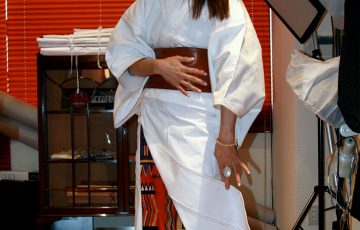
Girls have adopted a more masculine-presenting style consisting of oversized blazers over tight fitted tops with a wide leg pant. It is common to see women in loose-fitting clothing whether it be business casual or street style with a baggy t-shirt and shorts. Men can be seen wearing baggy jeans and tighter-fitted shirts with a black and white color scheme. Layering is more popular than ever as are long, drapey skirts and lace sweater tops. 2020’s fashion is distinct while still borrowing main elements from the past eras we have discussed.
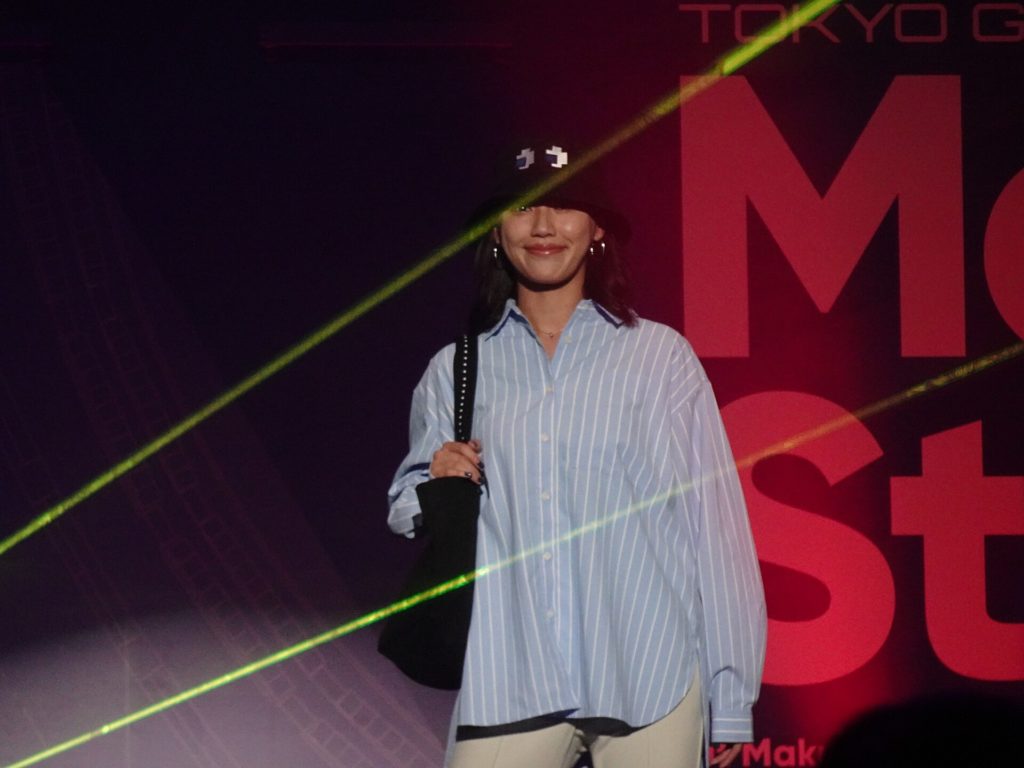
“AZUL by MOUSSY fashion show 2023” by Yuki Uchida is licensed under a CC by 4.0 license
Fashion is divided into more subcultures rather than unique individual styles because of the dependence on social media for trends. Social media has taken over every facet of the culture. Rather than scavenging the stands for your favorite magazine and seeing what they are wearing inside, young people simply open their phones and see what they should be wearing. The influences are also more global as it is easy to reach people from across the world with a single tap. The styles in Japan today are more muted and reserved compared to the rebellious decades that preceded it, which could signal a change soon.
Overall, the fashion in Tokyo has always paved its own way and created its own niche in a global sense. Although much of the novelty of Tokyo fashion brands and stores has faded, the style is still alive in the streets and with the youth. Each era of fashion in Japan has told a story about the people who wear it. Despite a drastic change in the industry that has developed from globalization and fast fashion within the last several years, Japan has never lost its whimsy and continues to pioneer fashion and culture globally.
by Sofia Gonzalez

-150x150.jpg)




.jpg)

.jpg)


Recent Comments